


I've started seriously questioning whether apps should exist at all.
An app is a container we inherited from how the stack is built. With an app, the maker holds everything and you just use it. With a platform you get to build, but inside someone else's rules, and whatever you make still ships as its own separate app. With an engine or a builder you make the thing, but it detaches and leaves as its own object. Every rung hands the authority to someone else, and the output always ends up as a separate, finished thing you step out of.
What I'm building breaks that ladder. It lets you build something and be inside it at the same time, and it hands that authority to the person using it, to move up and down the stack themselves instead of being locked to one rung. Once that's true, the app as a unit stops making sense. There's nothing to ship out and step away from.
I tried to name it and came up empty, which told me something. It's a platform and an environment at once, maybe a framework too, and every existing word only covers one part. A browser browses. A game engine builds a world but ships a separate game. App builders build, but the output leaves as its own app. Building something and being inside it at once is the thing none of them name. That's why it's a new category, not a new product.
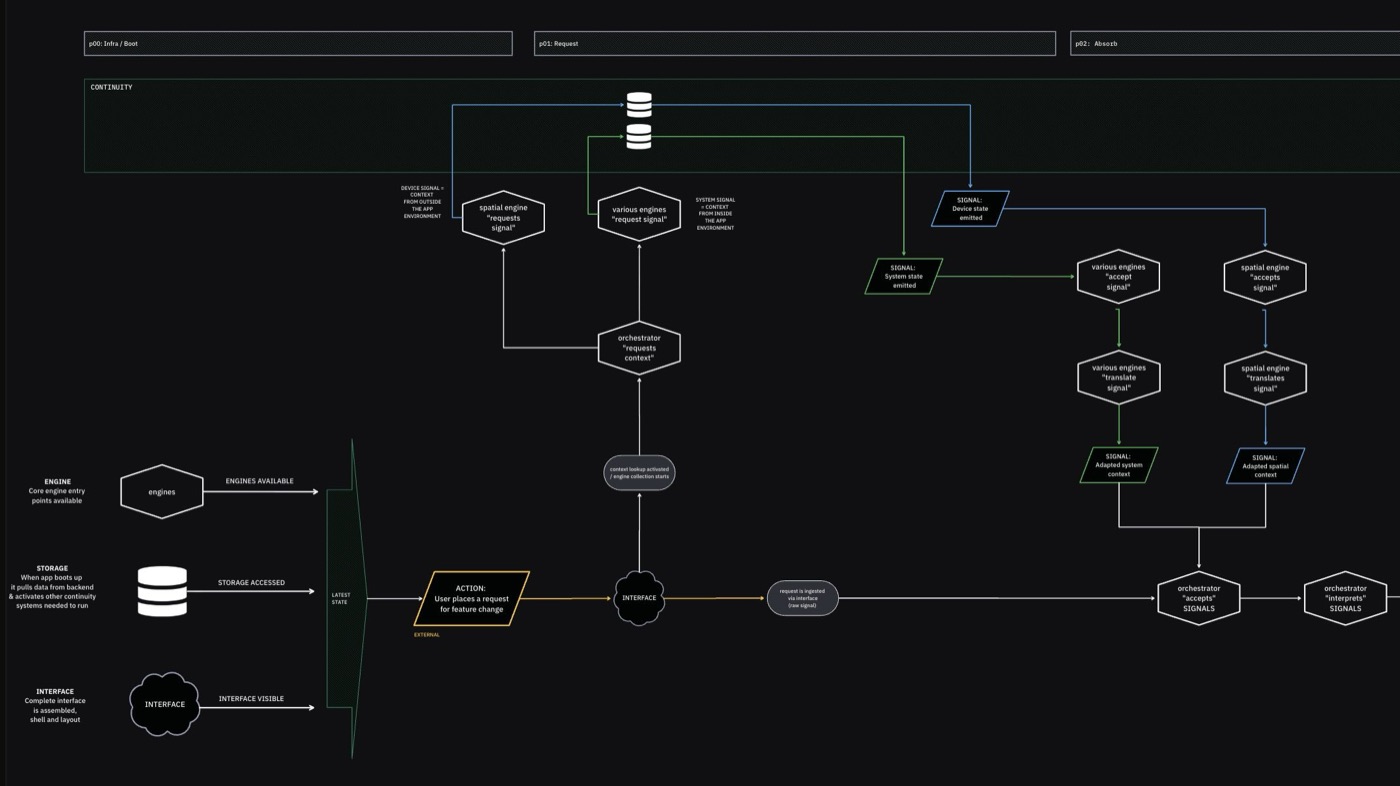
To get there I've been back at the fundamentals of how computers work, down to how a machine goes from power on to a running program. It's pointed me toward placing this above the operating system as its own detached engine, separate from any product, something a whole generation of apps, or whatever replaces them, could be built on. Sitting at that layer, I even find myself wondering what happens to operating systems, whether they end up as something more like terminals.